
At Drill King International, we’ve been engineering and supplying DTH drilling equipment for over four decades. We’ve seen what happens when operators match the right method to the job – and what happens when they don’t. This guide cuts through the noise and gives you a clear, honest picture of both drilling methods, their strengths, their limitations, and exactly when to reach for one over the other.
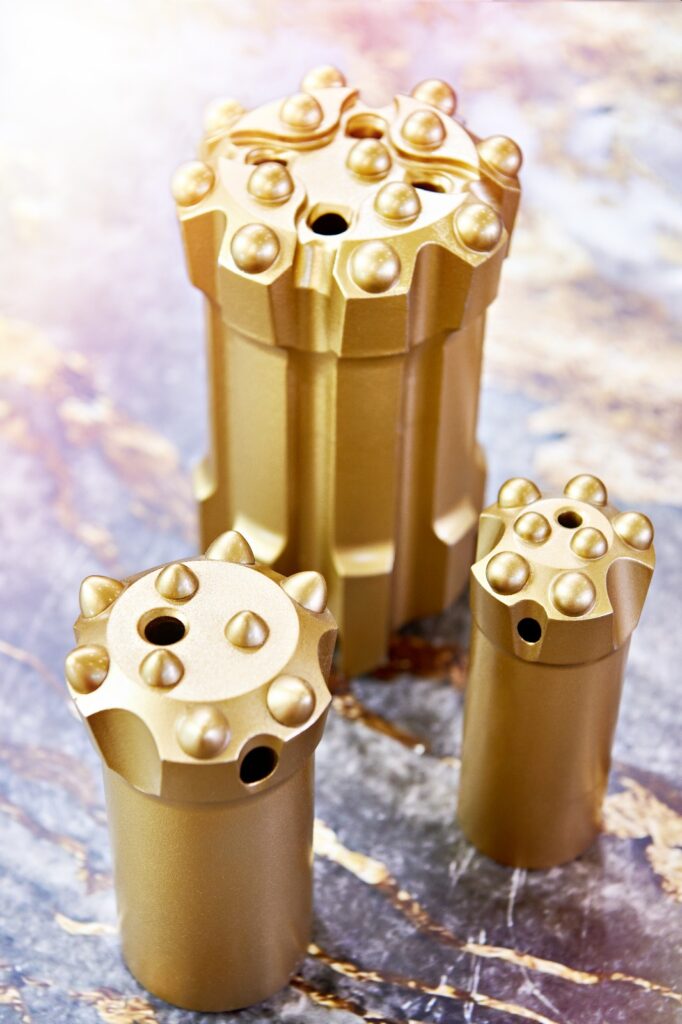
DTH (Down-the-Hole) drilling places the hammer at the very bottom of the drill string, sitting directly behind the drill bit. Compressed air drives a piston inside the hammer at high frequency, delivering powerful percussive blows straight to the bit face. Because the impact energy is generated at the point of contact, virtually none of it is lost travelling down the drill string. The same compressed air that powers the hammer also carries cuttings back up the borehole, keeping the hole clean and the bit working efficiently. The result is a system that delivers consistent, high-energy impact regardless of depth – which is precisely why DTH dominates in hard rock environments.
Rotary drilling works on an entirely different principle. Energy is generated at the surface and transmitted downward through a rotating drill string. The bit – typically a tricone roller cone or a PDC (polycrystalline diamond compact) bit – grinds, scrapes, or crushes the formation using a combination of rotational torque and weight-on-bit (WOB). Drilling fluid, whether water-based mud, air, or another medium, is circulated down the pipe and back to surface to cool the bit and flush cuttings. Rotary rigs are versatile machines: they can handle everything from loose overburden to moderately hard rock simply by changing the bit and adjusting fluid parameters.
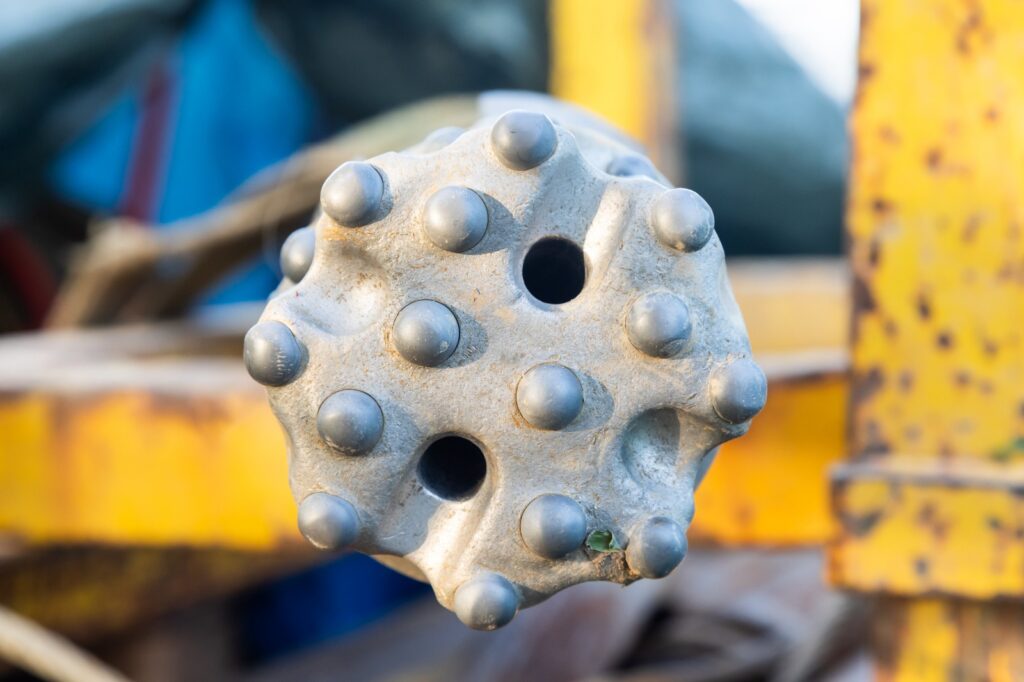
On hole diameter, the picture is different. DTH excels across a wide range – Drill King’s DTH air hammers cover 2″ to 24″ and our DTH button bits span 2 ¾”- 42” (70mm to 1,067mm). Rotary drilling with large tricone bits or PDC bits is better suited to very large-diameter holes, particularly in the oil and gas sector.
Borehole straightness and quality is where DTH has a meaningful edge in hard ground. The bottom-hole hammer assembly keeps the bit aligned and working consistently, minimising deviation. Straight, clean boreholes matter enormously in blast hole patterns (inaccurate holes disrupt fragmentation results), foundation piling (structural load paths depend on accurate placement), and water well construction (casing installation becomes problematic in deviated holes).
Choosing between DTH and rotary should always start with a geological assessment. Here’s a straightforward way to think through it:
Many operations encounter variable geology – hard rock interbedded with softer zones, or overburden followed by bedrock. A common and highly effective approach is to use rotary for the overburden section where it’s faster and more economical, then switch to DTH when the hard rock is encountered. Understanding your geological section before mobilising saves significant cost.
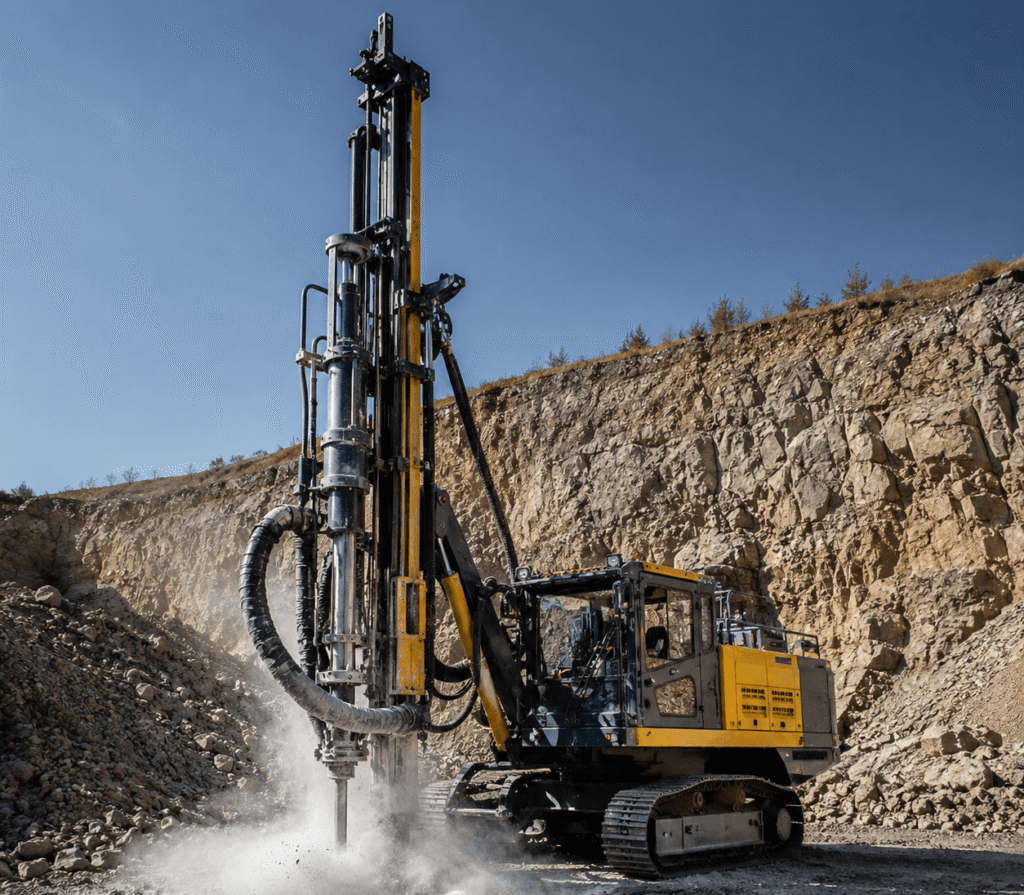
In hard rock formations, yes – often significantly so. DTH delivers percussive energy directly to the bit face, achieving penetration rates two to three times higher than rotary in materials like granite or quartzite. In soft ground, the comparison reverses: rotary drilling is typically faster in clays, sands, and softer sedimentary sequences where high rotation speed suits the formation better than percussive impact.
Yes. DTH drilling maintains consistent performance at depth because the hammer sits at the bottom of the drill string, so energy transmission doesn’t degrade as the hole deepens. Drill King’s DTH air hammers are regularly used in water well, mining, and foundation applications well beyond 330 ft (100 metres). Extremely deep wells of several kilometres (such as oil and gas wells) are the domain of rotary drilling, but for most mining, construction, and water well depths, DTH is highly capable.
DTH drilling using air flush has a smaller surface footprint and requires no large mud management system, reducing fluid-related environmental risk. DTH operations in hard rock also generate minimal ground disturbance beyond the borehole itself. Rotary drilling with mud systems introduces fluid containment and disposal obligations. For environmentally sensitive projects, DTH’s cleaner operational profile is a meaningful advantage.
Drill King International has been helping drilling operations make that call for over four decades. Our DTH air hammers cover 2″ to 24″, our custom button bits span 2¾” to 42 (70mm-1,067mm) “, and our technical team carries the kind of field experience that comes from supplying tools to mining, water well, construction, geothermal, and exploration operations worldwide.
If you’re evaluating methods for an upcoming project or looking to optimise an existing operation, request a quote or contact our team – we’ll help you drill smarter.